How to unclog a bathroom drain without harsh chemicals
Skip the caustic drain cleaner. Here's how Rocklin homeowners clear bathroom clogs safely with boiling water, baking soda, vinegar, and a little patience.
You can clear most bathroom drain clogs without pouring caustic chemicals down the pipe. Boiling water, a cup of baking soda, a cup of vinegar, and 15 minutes of contact time will dissolve the soap scum and hair gunk that causes roughly 80 percent of bathroom clogs in Rocklin homes. If that fails, a plunger or a $20 drain snake usually finishes the job. Chemical drain cleaners are rarely necessary, and in Rocklin's older housing stock they can do real damage to pipes that are already 40 or 50 years old.
This guide walks you through the safe methods in order of how aggressive they are, explains why our local water chemistry makes some clogs worse than others, and tells you exactly when to stop DIY-ing and call a plumber.
Why bathroom drains clog in Rocklin
Bathroom drain clogs in Rocklin form from three ingredients: hair, soap scum, and the mineral content of our water. Rocklin's municipal supply pulls from a mix of surface water and groundwater that runs moderately hard, somewhere in the 8 to 12 grains per gallon range depending on the season. That hardness leaves calcium and magnesium deposits inside your drain line. Hair catches on those deposits, soap scum binds to the hair, and within a few months you have a plug that no amount of hot water alone will move.
Older neighborhoods around Downtown Rocklin and the streets near Johnson-Springview Park have another factor: cast iron and galvanized steel drain lines that have been in the ground since the 1960s and 1970s. Those pipes corrode from the inside, which creates a rough surface that grabs debris far faster than modern ABS plastic. If your home was built before 1985, expect clogs to return more often unless the line gets properly cleaned.
Newer construction on the west side of town, including the Whitney Ranch and Stanford Ranch areas, has smoother PVC drains but a different problem: low-flow fixtures. A 1.28-gallon-per-flush toilet and a 1.5-gallon-per-minute shower head move less water through the pipe, so debris sits longer and has more time to settle. Low flow saves water, but it also means you need to be more proactive about maintenance.
Understanding which of these situations applies to your home tells you whether a simple DIY fix will hold or whether you are looking at a recurring problem that needs a real solution. Many homeowners we work with on drain cleaning rocklin CA assumed they had a one-time clog when the real issue was scale buildup in a 50-year-old pipe.
How do I unclog a bathroom drain in Rocklin without chemicals?
Start with the gentlest method and work your way up. The order matters because each step tells you something about what is actually blocking the drain. If boiling water clears it, you had a grease or soap clog. If vinegar and baking soda clear it, you had a soft organic clog. If neither works and a snake pulls out a hair wad the size of a mouse, you know exactly what the problem was and how to prevent it next time.
Here is the sequence we recommend, from least to most aggressive:
- Boiling water. Pour a full kettle of boiling water down the drain in two or three stages, waiting 30 seconds between pours. This melts grease and softens soap scum.
- Baking soda and vinegar. One cup of baking soda, then one cup of white vinegar. Cover the drain, wait 15 minutes, then flush with hot water.
- Plunger. A cup-style plunger works better than a flat one on bathroom sinks. Seal the overflow hole with a wet rag first.
- Drain snake. A 25-foot hand snake from any hardware store will reach most bathroom clogs. Feed it in, crank, and pull the debris out.
- Wet vacuum. If you have a shop vac, seal it over the drain and suck. Messy but effective on soft clogs.
If you get through all five and water still stands, the clog is past the trap and probably in the branch line or the main. That is when you stop and call us.
The baking soda and vinegar method
The baking soda and vinegar reaction is the closest thing to a natural drain cleaner that actually works. It is not magic. The fizzing you see is carbon dioxide gas, and the mechanical agitation of that gas breaking through the clog is what does the work, along with the mild acidity of the vinegar softening soap scum.
Here is how to do it properly so it actually clears the drain instead of just looking impressive:
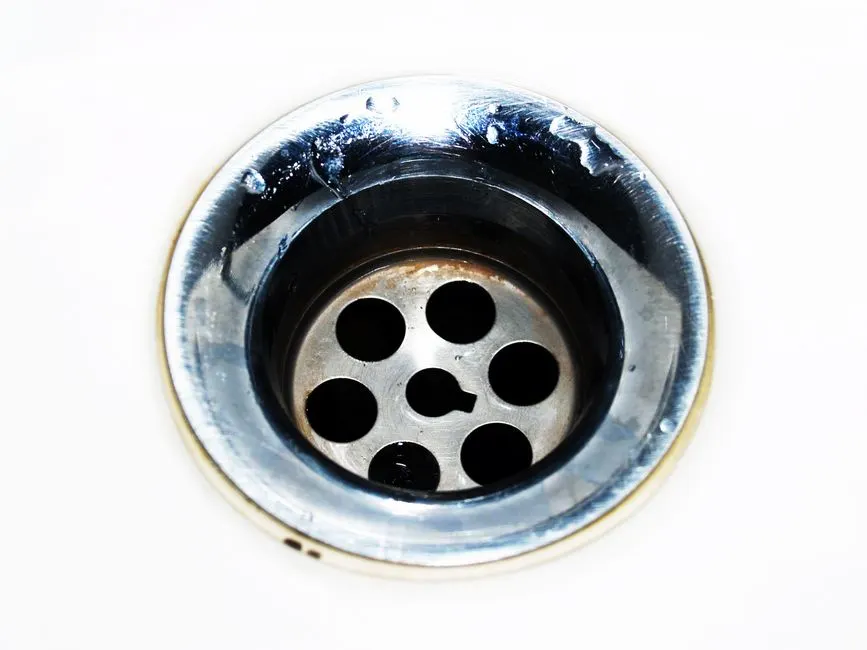
- Remove the drain stopper and pull out any visible hair with a bent wire or needle-nose pliers. This step alone clears a surprising number of clogs.
- Pour one cup of dry baking soda straight down the drain. Do not add water yet.
- Pour one cup of white vinegar (5 percent acidity, the standard grocery store strength) directly on top of the baking soda.
- Immediately plug the drain with the stopper or a rag. You want the pressure pushing down the pipe, not escaping up into your bathroom.
- Wait 15 full minutes. Not five. The reaction needs time to work through the clog.
- Flush with a full kettle of boiling water, poured slowly.
If the drain runs freely after that, you are done. If it drains slowly, repeat once. If it is still backed up after two rounds, the clog is too far down for this method and you need mechanical removal.
One note on vinegar: do not use it if you have already poured a commercial chemical cleaner down the drain. The two can react and produce fumes that are genuinely dangerous in a small bathroom. Flush with plenty of water first, and ideally wait 24 hours.
Boiling water, plungers, and drain snakes
Boiling water is the single most underrated tool in bathroom drain maintenance. A full kettle, poured in stages, will clear a grease or soap clog more often than any product on the shelf. The trick is to pour slowly and give the heat time to transfer to the pipe walls, not just rush past the clog.
Do not use boiling water on a toilet. The porcelain can crack from thermal shock. For toilets, use hot tap water and a plunger.
For plunging, technique matters more than force. A cup-style plunger creates a better seal on a bathroom sink than a flat-bottomed one. Before you plunge, block the overflow hole with a wet rag. If you skip that step, you are just pushing air out the overflow instead of pressure down the drain. Plunge with short, sharp strokes, 15 to 20 of them, then pull the plunger off quickly on the last stroke to break the seal.
A hand snake is the next step up and costs $20 to $40 at any Rocklin hardware store. Feed the cable into the drain until you feel resistance, tighten the set screw, and crank the handle clockwise while pushing gently. When you feel the cable bite into something, keep cranking and then pull the whole thing out. You will probably be disgusted by what comes up. That is normal.
If you want to prevent the clog from coming back, run hot water for 30 seconds after every shower and once a week pour a kettle of boiling water down each bathroom drain. That single habit prevents most of the clogs we get called out for. For homes with recurring problems, we often recommend hydro jetting rocklin CA, which scours the pipe walls clean instead of just punching a hole through the clog.
What is the best way to unclog a drain in Rocklin CA?
The best method depends on where the clog is and how long it has been building. For a slow drain that started this week, boiling water and baking soda will usually do it. For a drain that has been slow for months, you need mechanical removal because the clog has compacted against the pipe wall and no amount of fizzing will break it loose.
Here is a rough decision guide based on what we see in Rocklin homes:
- Slow drain, less than two weeks: boiling water, then baking soda and vinegar. 80 percent success rate.
- Slow drain, more than a month: plunge first, then snake. The clog is compacted.
- Complete blockage: snake immediately. Skip the home remedies.
- Multiple drains backing up at once: this is a main line problem, not a bathroom drain problem. Call a plumber.
- Sewage smell or gurgling from other fixtures: main line or vent issue. Call a plumber.
If your home is on the older side, the recurring clog might be a symptom of something bigger. Cast iron drain lines that have been in the ground for 50 years develop rough interiors and, eventually, cracks. We inspect those lines with a camera before recommending any repair, because the difference between a $250 drain cleaning and a $6,000 sewer replacement matters. You can read more about how we handle that on our page for sewer camera inspection rocklin CA.
For most Rocklin homeowners, the honest answer is this: try the DIY methods first. If they work, great. If the clog comes back within a month, you have a bigger issue and it is worth having someone look at it properly.
Common mistakes to avoid
The biggest mistake is reaching for chemical drain cleaner first. Those products contain sodium hydroxide or sulfuric acid, and they generate heat when they react with water. In an older pipe with any corrosion or a partial crack, that heat can turn a $200 problem into a $2,000 repair. They also sit in the trap and can burn a plumber who has to open the line later.
Other mistakes we see regularly:
- Using a plunger without blocking the overflow. You are just moving air around.
- Pouring boiling water into a toilet. Porcelain cracks. Use hot tap water.
- Mixing chemical cleaners. Bleach plus ammonia, or Drano plus vinegar, can produce toxic gas.
- Snaking without protecting the finish. A bare metal snake will scratch a chrome drain flange. Wrap it in tape or use a plastic boot.
- Ignoring a recurring clog. If you are clearing the same drain every two months, the pipe has a problem that clearing will not fix.
- Using a drain snake on a toilet. Toilets have a built-in trap that a snake can damage. Use a toilet auger instead.
One more: do not trust the "flushable" label on wipes. They are not flushable in any meaningful sense, and they are a leading cause of the main line clogs we clear in Rocklin. If it does not dissolve in water in under a minute, it does not belong in the drain.
When to call a professional
Call a plumber when the clog comes back within a month, when more than one drain in the house is slow, when you hear gurgling from other fixtures, or when you smell sewage. Those are signs the problem is in the main line or the vent stack, not in the bathroom drain itself. No home remedy will fix a root intrusion or a collapsed pipe.
You should also call us if you have already tried a chemical cleaner and it did not work. We need to know that before we open the line so we can take the right precautions. And if your home was built before 1980 and you have never had the drain lines inspected, it is worth having a camera run through them once. It takes about 30 minutes and tells you exactly what condition the pipes are in.
Our team handles drain work across Rocklin every week, from simple bathroom sink clogs to full main line blockages. We find the clog, clear it, and test the line before we leave. If the problem is bigger than a clog, we tell you straight and give you a written price before any work starts. You can see the full range of what we do on our residential plumbing rocklin CA page, or call us directly if you want to talk it through first.
Frequently Asked Questions
How do I unclog a bathroom drain in Rocklin without chemicals?
Start with boiling water poured in stages, then try one cup of baking soda followed by one cup of vinegar. Let it sit 15 minutes, then flush with hot water. If that does not clear it, use a cup-style plunger with the overflow blocked, then a hand snake. These methods clear about 90 percent of bathroom clogs.
What is the best way to unclog a drain in Rocklin CA?
For a recent slow drain, boiling water and baking soda work best. For a clog that has been building for weeks, a drain snake is more effective because the debris has compacted. If multiple drains are slow or you smell sewage, the issue is in the main line and needs a professional.
Can I use vinegar to unclog a drain in Rocklin?
Yes. White vinegar at 5 percent acidity combined with baking soda creates a fizzing reaction that breaks up soft organic clogs. Use one cup of each, plug the drain, wait 15 minutes, then flush with boiling water. It works well on soap scum and light hair clogs but will not clear a compacted or main line blockage.
How often should I clean my bathroom drain to prevent clogs?
Once a week, pour a kettle of boiling water down each bathroom drain. Once a month, do the baking soda and vinegar treatment. If you have long hair or use a lot of soap products, do the boiling water flush twice a week. This routine prevents most of the clogs we see in Rocklin homes.
Are chemical drain cleaners safe for older pipes?
No. Chemical cleaners generate heat when they react with water, and that heat can crack corroded cast iron or galvanized pipes. In Rocklin homes built before 1985, the risk of a $200 clog turning into a $2,000 pipe repair is real. Use mechanical methods instead.
Get help with plumbing in Rocklin
If you have tried the safe methods and your drain is still backed up, or if the same clog keeps returning, we can clear it and tell you why it keeps happening. We serve homeowners across Rocklin with same-day drain service and upfront pricing.
Call Rocklin Granite Flow Plumbing at (279) 790-0111 and we will get your bathroom draining like it should.